 English
 Afrikaans
 Albanian
 Amharic
 Arabic
 Armenian
 Azerbaijani
 Basque
 Belarusian
 Bengali
 Bosnian
 Bulgarian
 Catalan
 Cebuano
 Chichewa
 Chinese (Simplified)
 Chinese (Traditional)
 Corsican
 Croatian
 Czech
Czech Danish
 Dutch
Dutch Esperanto
 Estonian
 Filipino
 Finnish
 French
 Frisian
 Galician
 Georgian
 German
 Greek
Greek Gujarati
 Haitian Creole
 Hausa
Hausa Hawaiian
 Hebrew
 Hindi
Hindi Hmong
Hmong Hungarian
 Icelandic
 Igbo
Igbo Indonesian
 Irish
Irish Italian
 Japanese
 Javanese
 Kannada
 Kazakh
 Khmer
Khmer Korean
 Kurdish (Kurmanji)
 Kyrgyz
 Lao
Lao Latin
Latin Latvian
 Lithuanian
 Luxembourgish
 Macedonian
 Malagasy
 Malay
Malay Malayalam
 Maltese
 Maori
Maori Marathi
 Mongolian
 Myanmar (Burmese)
 Nepali
 Norwegian
 Pashto
 Persian
 Polish
 Portuguese
 Punjabi
 Romanian
 Russian
 Samoan
 Scottish Gaelic
 Serbian
 Sesotho
 Shona
Shona Sindhi
 Sinhala
 Slovak
 Slovenian
 Somali
 Spanish
 Sudanese
 Swahili
 Swedish
 Tajik
Tajik Tamil
Tamil Telugu
 Thai
Thai Turkish
 Ukrainian
 Urdu
Urdu Uzbek
Uzbek Vietnamese
 Welsh
Welsh Xhosa
Xhosa Yiddish
 Yoruba
 Zulu
Zulu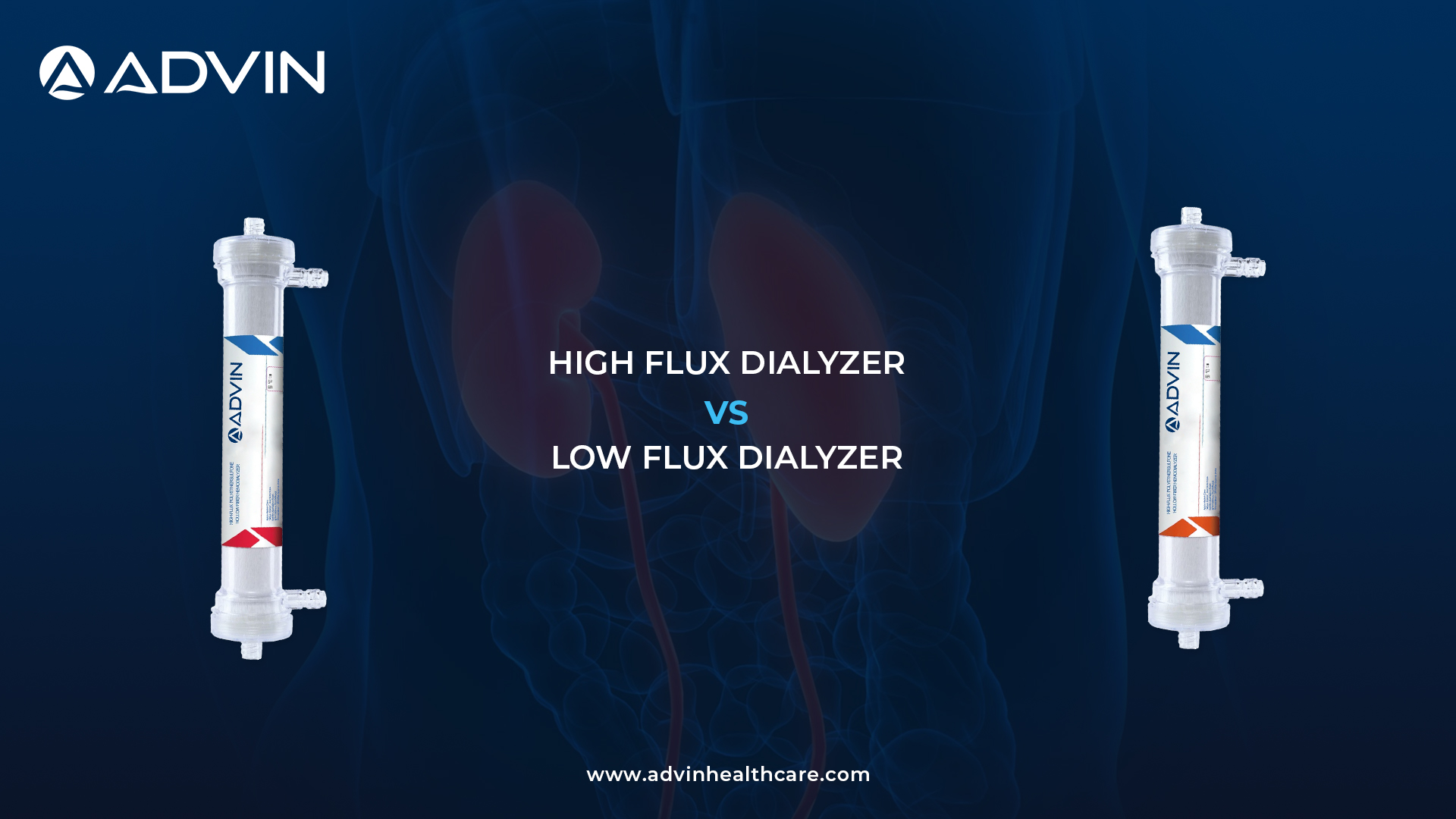
In modern hemodialysis therapy, the choice of dialyzer plays a critical role in determining treatment efficiency and patient outcomes. Among the most commonly used options are high-flux and low-flux dialyzers. Understanding their differences helps healthcare providers select the most appropriate solution for optimal patient care.
What is a Dialyzer?
A dialyzer, often referred to as an “artificial kidney,” is a vital component in hemodialysis. It removes waste products and excess fluids from the blood through a semi-permeable membrane.
High-Flux Dialyzers
High-flux dialyzers are designed with advanced membrane technology that allows for higher permeability. This means they can remove not only small waste molecules like urea and creatinine but also larger “middle molecules” such as beta-2 microglobulin.
Key Features:
- Larger pore size membrane
- High ultrafiltration coefficient (KUF)
- Efficient removal of middle molecules
- Faster fluid removal
Benefits:
- Improved toxin clearance
- Reduced risk of long-term complications like dialysis-related amyloidosis
- Better overall patient outcomes
Considerations:
- Requires ultrapure dialysis water due to risk of backfiltration
- Higher cost compared to low-flux dialyzers
Low-Flux Dialyzers
Low-flux dialyzers use membranes with smaller pore sizes, making them suitable for removing small molecules only, such as urea and creatinine.
Key Features:
- Smaller pore size
- Lower ultrafiltration coefficient
- Limited removal of middle molecules
Benefits:
- Cost-effective solution
- Suitable for basic dialysis needs
- Lower requirement for advanced water purification systems
Considerations:
- Less efficient in removing larger toxins
- May not provide the same long-term clinical benefits as high-flux dialyzers
Key Differences at a Glance
| Feature | High-Flux Dialyzer | Low-Flux Dialyzer |
| Membrane Permeability | High | Low |
| Molecule Removal | Small + Middle Molecules | Small Molecules Only |
| Ultrafiltration Rate | High | Low |
| Water Quality | Requires Ultrapure Water | Standard Water Acceptable |
| Cost | Higher | Lower |
| Clinical Outcomes | Improved | Basic |
Which One Should You Choose?
The choice between high-flux and low-flux dialyzers depends on several factors, including:
- Patient condition
- Duration of dialysis treatment
- Availability of ultrapure water systems
- Budget and infrastructure
In advanced dialysis centers, high-flux dialyzers are increasingly preferred due to their superior performance and better patient outcomes. However, low-flux dialyzers still play an important role in settings where resources are limited.
Conclusion
- Both high-flux and low-flux dialyzers serve essential roles in dialysis therapy. While high-flux dialyzers offer enhanced clearance and improved long-term benefits, low-flux dialyzers remain a reliable and economical option for many healthcare facilities.
- Choosing the right dialyzer ultimately ensures safer, more effective dialysis and better quality of life for patients.
Get Connected:
+91-75037 27249 | dialysis@advinhealthcare.com | www.advinhealthcare.com