 English
 Afrikaans
 Albanian
 Amharic
 Arabic
 Armenian
 Azerbaijani
 Basque
 Belarusian
 Bengali
 Bosnian
 Bulgarian
 Catalan
 Cebuano
 Chichewa
 Chinese (Simplified)
 Chinese (Traditional)
 Corsican
 Croatian
 Czech
Czech Danish
 Dutch
Dutch Esperanto
 Estonian
 Filipino
 Finnish
 French
 Frisian
 Galician
 Georgian
 German
 Greek
Greek Gujarati
 Haitian Creole
 Hausa
Hausa Hawaiian
 Hebrew
 Hindi
Hindi Hmong
Hmong Hungarian
 Icelandic
 Igbo
Igbo Indonesian
 Irish
Irish Italian
 Japanese
 Javanese
 Kannada
 Kazakh
 Khmer
Khmer Korean
 Kurdish (Kurmanji)
 Kyrgyz
 Lao
Lao Latin
Latin Latvian
 Lithuanian
 Luxembourgish
 Macedonian
 Malagasy
 Malay
Malay Malayalam
 Maltese
 Maori
Maori Marathi
 Mongolian
 Myanmar (Burmese)
 Nepali
 Norwegian
 Pashto
 Persian
 Polish
 Portuguese
 Punjabi
 Romanian
 Russian
 Samoan
 Scottish Gaelic
 Serbian
 Sesotho
 Shona
Shona Sindhi
 Sinhala
 Slovak
 Slovenian
 Somali
 Spanish
 Sudanese
 Swahili
 Swedish
 Tajik
Tajik Tamil
Tamil Telugu
 Thai
Thai Turkish
 Ukrainian
 Urdu
Urdu Uzbek
Uzbek Vietnamese
 Welsh
Welsh Xhosa
Xhosa Yiddish
 Yoruba
 Zulu
Zulu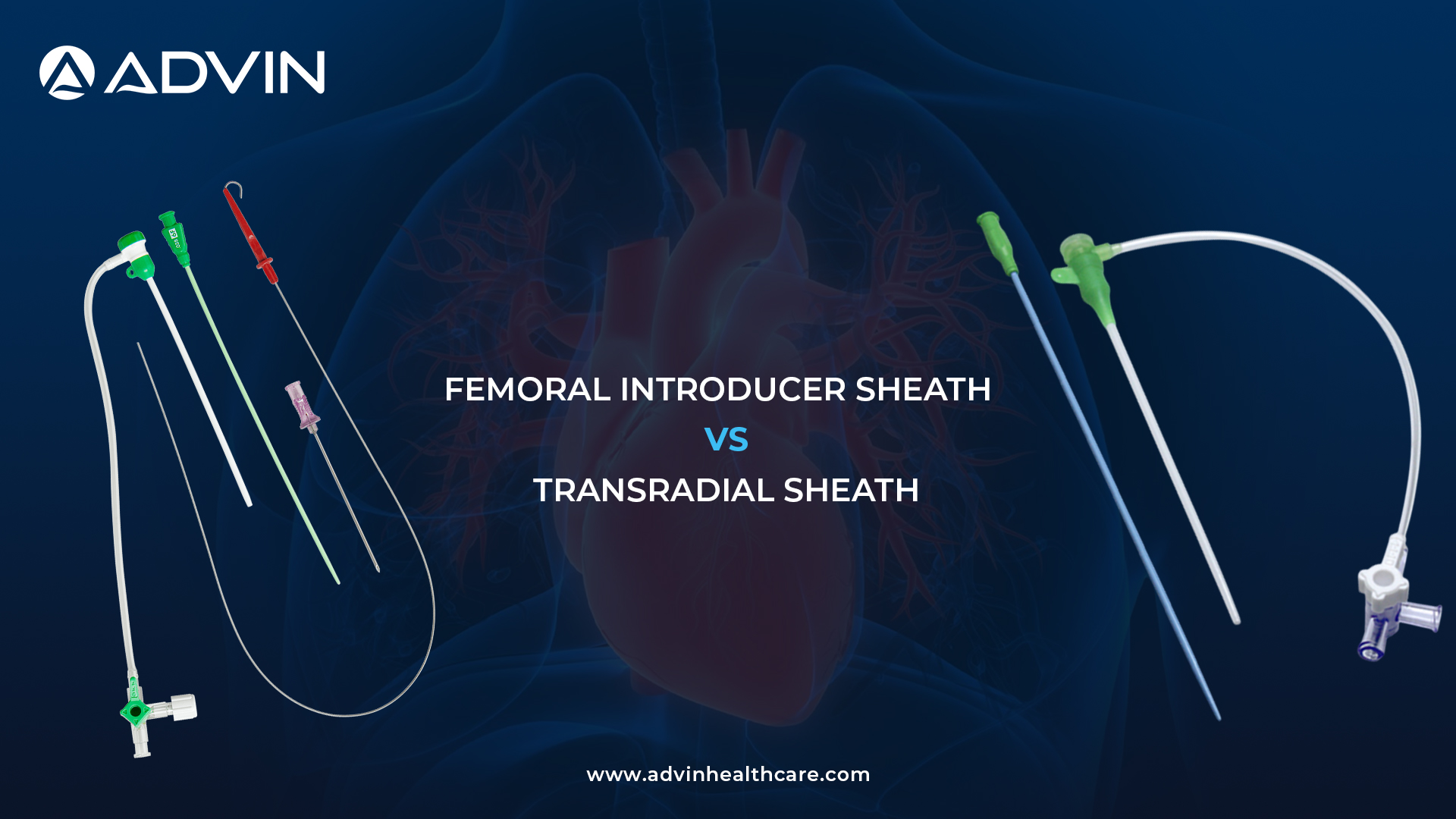
Introduction
In interventional cardiology, vascular access is a critical step that directly impacts procedural success, patient safety, and recovery time. The Femoral Introducer Sheath and the Transradial Sheath are two widely used devices that enable safe and efficient access to the vascular system during procedures such as angiography and angioplasty.
While both serve the same fundamental purpose, their clinical approach, patient comfort, and procedural advantages differ significantly. Understanding these differences helps in selecting the most appropriate device based on patient condition and procedural requirements.
Product Overview
🔹 Femoral Introducer Sheath
The Femoral Introducer Sheath is a traditional vascular access device inserted through the femoral artery in the groin. It is commonly used in cardiology procedures that require strong support and flexibility, particularly in complex interventions.
🔹 Transradial Sheath
The Transradial Sheath is designed for vascular access via the radial artery in the wrist. It has gained widespread acceptance due to its minimally invasive approach, improved patient comfort, and lower risk of complications.
Quick Comparison Table
| Feature | Femoral Introducer Sheath | Transradial Sheath |
| Access Site | Femoral artery (Groin) | Radial artery (Wrist) |
| Procedure Approach | Traditional | Minimally invasive |
| Patient Comfort | Moderate | High |
| Mobility After Use | Restricted | Early mobility |
| Bleeding Control | Moderate complexity | Easier management |
| Recovery Time | Longer | Faster |
| Clinical Use | Complex procedures | Routine & minimally invasive |
Key Feature Comparison
- Access Technique
The Femoral Introducer Sheath uses groin-based access, providing a direct and well-established pathway for vascular entry. In contrast, the Transradial Sheath utilizes wrist-based access, enabling a less invasive and more patient-friendly approach.
- Patient Comfort
Patients undergoing procedures with a femoral approach typically require longer immobilization. On the other hand, the transradial approach allows early movement, significantly improving overall comfort.
- Bleeding Management
Femoral access carries a relatively higher risk of bleeding complications due to deeper vessel entry. Transradial access offers easier bleeding control and reduced complication risk.
- Recovery & Mobility
Recovery time is generally longer with femoral access due to movement restrictions. Transradial access enables faster recovery and early ambulation.
- Clinical Versatility
The femoral approach is preferred for complex and high-support procedures, whereas the transradial approach is ideal for routine and minimally invasive interventions.
Common Features
Both devices share essential features that ensure reliability and safety in cardiology procedures:
- Provide safe and efficient vascular access
- Designed for smooth insertion with minimal vessel trauma
- Compatible with standard interventional cardiology tools
- Ensure stable device positioning during procedures
- Support controlled and efficient workflow
- Sterile, single-use design for enhanced patient safety
Key Differences
- Access Site: Groin vs Wrist
- Patient Mobility: Restricted vs Early movement
- Bleeding Risk: Higher vs Lower
- Comfort Level: Moderate vs High
- Procedure Type: Complex vs Minimally invasive
Which One Should You Choose?
✅ Choose Femoral Introducer Sheath when:
-
- Complex procedures requiring strong support are involved
- Multiple device handling is needed
- A traditional access route is preferred
✅ Choose Transradial Sheath when:
-
- Patient comfort is a priority
- Faster recovery and early discharge are desired
- Lower bleeding risk is important
- Minimally invasive procedures are preferred
Conclusion
Both the Femoral Introducer Sheath and Transradial Sheath are essential components of modern interventional cardiology. While the femoral approach remains crucial for complex procedures, the transradial approach is increasingly preferred due to its safety, efficiency, and patient-friendly benefits.
Selecting the right device based on clinical needs ensures improved procedural outcomes, enhanced patient experience, and overall treatment success.
Get Connected:
+91-75037 27248 | cardiology@advinhealthcare.com | www.advinhealthcare.com