
 English
 Afrikaans
 Albanian
 Amharic
 Arabic
 Armenian
 Azerbaijani
 Basque
 Belarusian
 Bengali
 Bosnian
 Bulgarian
 Catalan
 Cebuano
 Chichewa
 Chinese (Simplified)
 Chinese (Traditional)
 Corsican
 Croatian
 Czech
Czech Danish
 Dutch
Dutch Esperanto
 Estonian
 Filipino
 Finnish
 French
 Frisian
 Galician
 Georgian
 German
 Greek
Greek Gujarati
 Haitian Creole
 Hausa
Hausa Hawaiian
 Hebrew
 Hindi
Hindi Hmong
Hmong Hungarian
 Icelandic
 Igbo
Igbo Indonesian
 Irish
Irish Italian
 Japanese
 Javanese
 Kannada
 Kazakh
 Khmer
Khmer Korean
 Kurdish (Kurmanji)
 Kyrgyz
 Lao
Lao Latin
Latin Latvian
 Lithuanian
 Luxembourgish
 Macedonian
 Malagasy
 Malay
Malay Malayalam
 Maltese
 Maori
Maori Marathi
 Mongolian
 Myanmar (Burmese)
 Nepali
 Norwegian
 Pashto
 Persian
 Polish
 Portuguese
 Punjabi
 Romanian
 Russian
 Samoan
 Scottish Gaelic
 Serbian
 Sesotho
 Shona
Shona Sindhi
 Sinhala
 Slovak
 Slovenian
 Somali
 Spanish
 Sudanese
 Swahili
 Swedish
 Tajik
Tajik Tamil
Tamil Telugu
 Thai
Thai Turkish
 Ukrainian
 Urdu
Urdu Uzbek
Uzbek Vietnamese
 Welsh
Welsh Xhosa
Xhosa Yiddish
 Yoruba
 Zulu
Zulu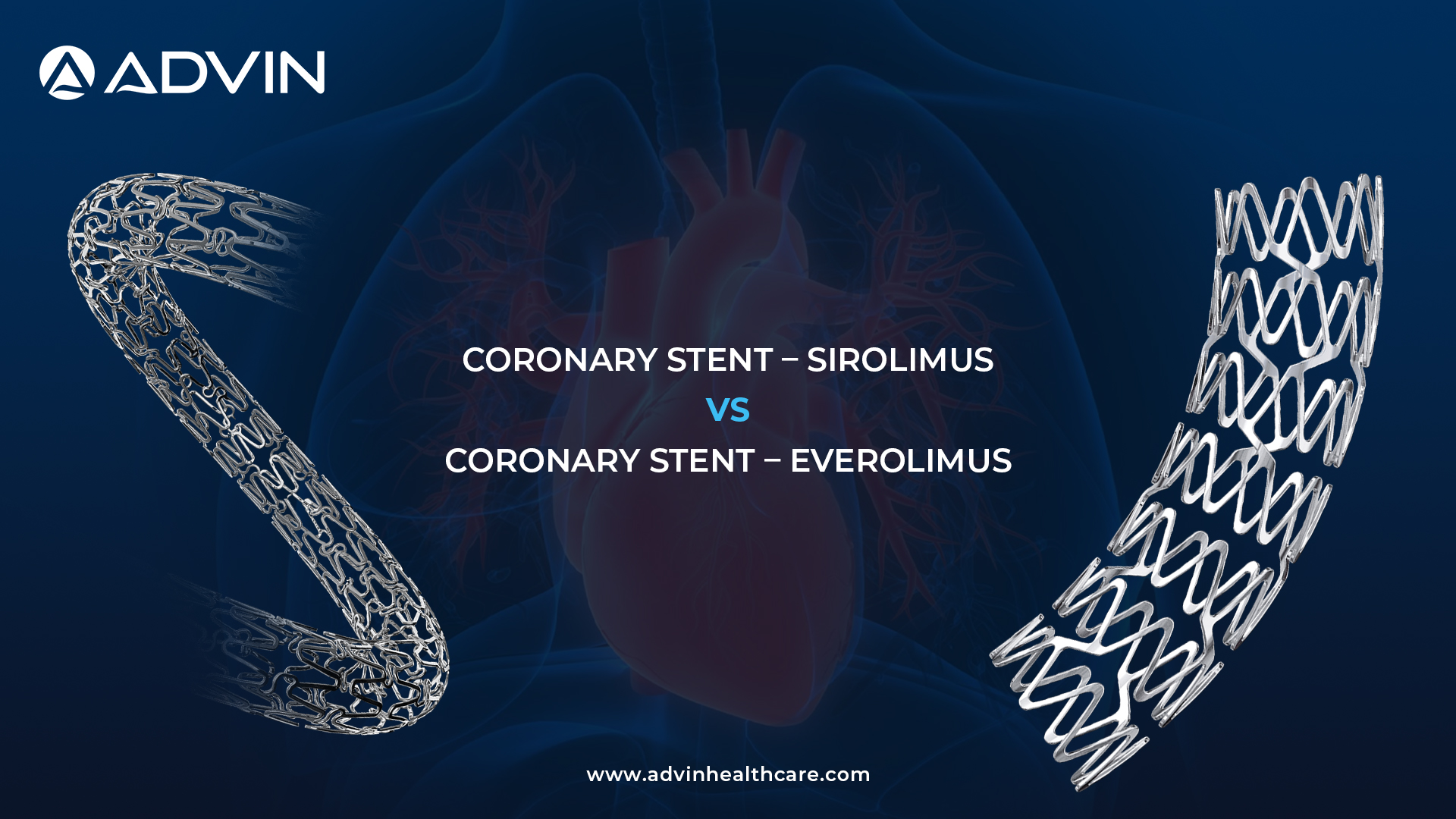
Introduction
In interventional cardiology, drug-eluting stents play a crucial role in keeping coronary arteries open after angioplasty. Among the most commonly used are Sirolimus-eluting stents and Everolimus-eluting stents. Both are designed to prevent restenosis by releasing medication that controls cell growth inside the artery.
While their purpose is the same, the drug coating and clinical performance approach differ slightly. Understanding these differences helps in selecting the most suitable stent for better patient outcomes.
Product Overview
Coronary Stent – Sirolimus
Sirolimus-eluting stents release a drug that effectively inhibits cell proliferation, reducing the risk of artery re-narrowing. They are widely known for their proven performance and long-term reliability in coronary interventions.
Coronary Stent – Everolimus
Everolimus-eluting stents use an advanced drug formulation that allows controlled drug release and improved healing response. They are commonly preferred for their enhanced safety profile and smooth performance.
Quick Comparison Table
| Feature | Sirolimus Stent | Everolimus Stent |
|---|---|---|
| Drug Type | Sirolimus | Everolimus |
| Drug Release | Controlled | More refined control |
| Healing Response | Effective | Improved |
| Safety Profile | Proven | Enhanced |
| Clinical Use | Standard cases | Advanced & routine cases |
Key Feature Comparison
Sirolimus Stent Features
- Strong anti-proliferative drug action
- Proven technology with long clinical history
- Effective in reducing restenosis
- Reliable performance in various procedures
- Suitable for standard coronary interventions
- Consistent drug delivery mechanism
Everolimus Stent Features
- Advanced drug formulation for controlled release
- Promotes faster and better vessel healing
- Lower risk of complications
- Smooth and predictable performance
- Widely preferred in modern cardiology practice
- Suitable for both routine and complex cases
Common Features
- Designed to keep coronary arteries open
- Help prevent restenosis after angioplasty
- Drug-eluting mechanism for controlled healing
- Compatible with standard angioplasty procedures
- Improve long-term patient outcomes
- Sterile and safe for single use
Key Differences
- Drug Type: Sirolimus vs Everolimus
- Healing Response: Standard vs Improved
- Safety Profile: Proven vs Enhanced
- Technology: Established vs Advanced
- Clinical Preference: Traditional vs Modern
Which One Should You Choose?
Choose Sirolimus Stent when
- A proven and reliable option is preferred
- Standard coronary procedures are performed
- Long-term clinical data is important
Choose Everolimus Stent when
- Better healing response is required
- Lower complication risk is a priority
- Advanced and modern treatment approach is preferred
Conclusion
Both Sirolimus and Everolimus coronary stents are highly effective in treating blocked arteries. Sirolimus stents offer proven reliability, while Everolimus stents provide advanced performance and improved safety.
Selecting the right stent depends on clinical needs, ensuring optimal results and enhanced patient care.
Get Connected:
+91-75037 27248 | cardiology@advinhealthcare.com | www.advinhealthcare.com