
 English
 Afrikaans
 Albanian
 Amharic
 Arabic
 Armenian
 Azerbaijani
 Basque
 Belarusian
 Bengali
 Bosnian
 Bulgarian
 Catalan
 Cebuano
 Chichewa
 Chinese (Simplified)
 Chinese (Traditional)
 Corsican
 Croatian
 Czech
Czech Danish
 Dutch
Dutch Esperanto
 Estonian
 Filipino
 Finnish
 French
 Frisian
 Galician
 Georgian
 German
 Greek
Greek Gujarati
 Haitian Creole
 Hausa
Hausa Hawaiian
 Hebrew
 Hindi
Hindi Hmong
Hmong Hungarian
 Icelandic
 Igbo
Igbo Indonesian
 Irish
Irish Italian
 Japanese
 Javanese
 Kannada
 Kazakh
 Khmer
Khmer Korean
 Kurdish (Kurmanji)
 Kyrgyz
 Lao
Lao Latin
Latin Latvian
 Lithuanian
 Luxembourgish
 Macedonian
 Malagasy
 Malay
Malay Malayalam
 Maltese
 Maori
Maori Marathi
 Mongolian
 Myanmar (Burmese)
 Nepali
 Norwegian
 Pashto
 Persian
 Polish
 Portuguese
 Punjabi
 Romanian
 Russian
 Samoan
 Scottish Gaelic
 Serbian
 Sesotho
 Shona
Shona Sindhi
 Sinhala
 Slovak
 Slovenian
 Somali
 Spanish
 Sudanese
 Swahili
 Swedish
 Tajik
Tajik Tamil
Tamil Telugu
 Thai
Thai Turkish
 Ukrainian
 Urdu
Urdu Uzbek
Uzbek Vietnamese
 Welsh
Welsh Xhosa
Xhosa Yiddish
 Yoruba
 Zulu
Zulu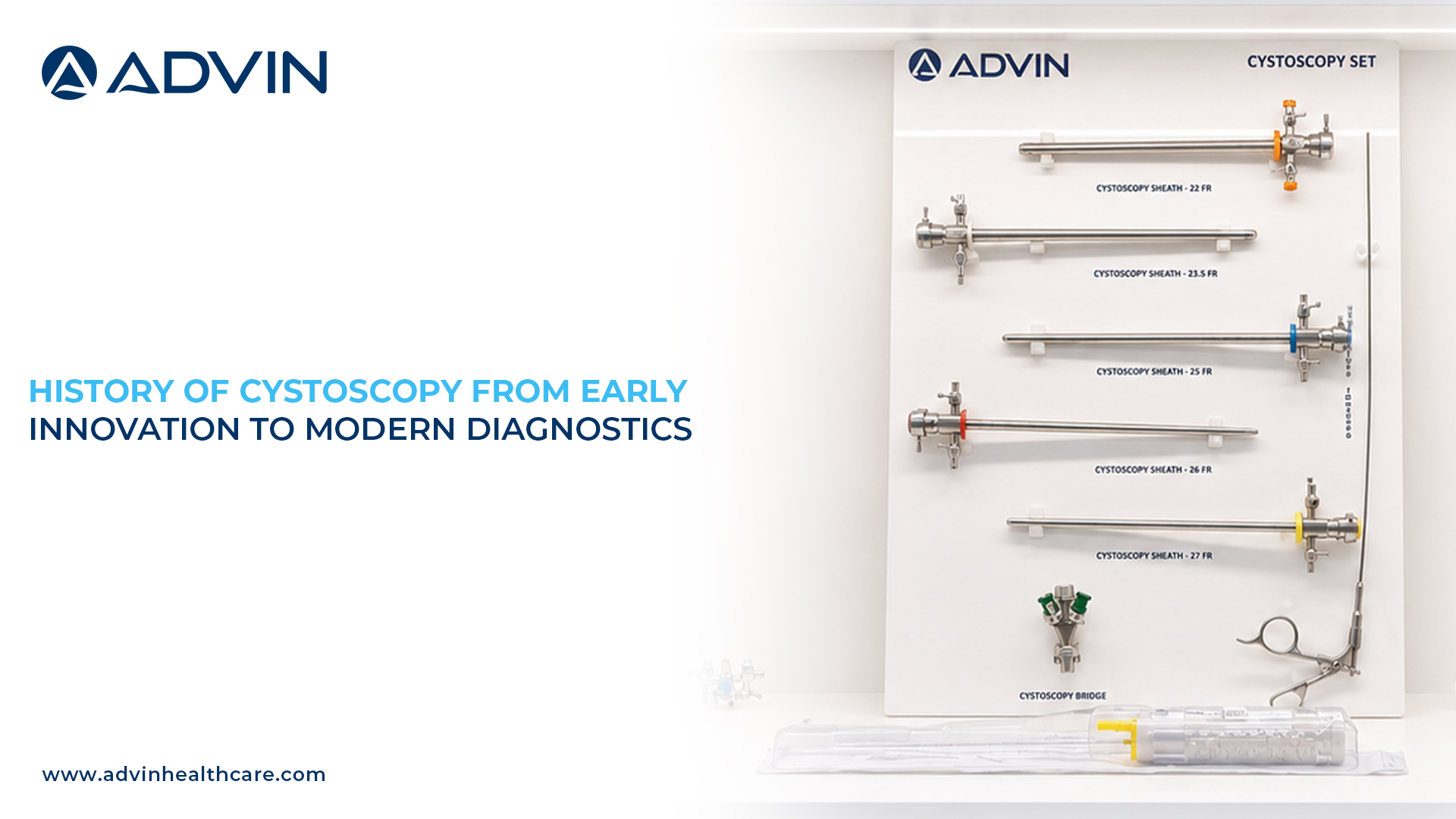
Introduction
Cystoscopy is one of the most important diagnostic and therapeutic procedures in urology, allowing direct visualization of the urinary bladder and urethra. Over time, cystoscopy has evolved from a rudimentary concept into a highly advanced, minimally invasive technique. Its development has played a crucial role in improving the diagnosis and treatment of urinary tract disorders.
Early Beginnings of Cystoscopy
The concept of examining the bladder internally dates back to the early 19th century. Initially, physicians attempted to visualize the bladder using simple tubes and reflected light sources such as candles or mirrors.
These early attempts were limited by poor illumination and lack of clear visibility, making diagnosis difficult and unreliable.
Invention of the First Cystoscope
A major breakthrough came with the invention of the first practical cystoscope by Max Nitze in the late 19th century.
This instrument used a built-in light source and optical system, allowing doctors to directly view the interior of the bladder for the first time. It revolutionized urology by enabling accurate diagnosis of bladder diseases, tumors, and stones.
Advancements in the Early 20th Century
In the early 20th century, cystoscopy technology improved significantly with:
- Better light sources (electric illumination)
- Improved lens systems for clearer visualization
- Enhanced instrument design for ease of use
These advancements made cystoscopy more reliable and widely adopted in clinical practice.
Development of Rigid and Flexible Cystoscopy
As technology progressed, two main types of cystoscopes were developed:
- Rigid Cystoscopes:
Provided excellent image clarity and were widely used for surgical procedures. - Flexible Cystoscopes:
Introduced later, offering greater patient comfort and easier navigation within the urinary tract.
Flexible cystoscopy became especially important for outpatient diagnostics and routine examinations.
Modern Cystoscopy Techniques
Today, cystoscopy is a highly advanced procedure supported by cutting-edge technology, including:
- High-definition camera systems
- Fiber-optic and digital imaging
- Video cystoscopy for real-time visualization
- Integration with minimally invasive surgical tools
Modern cystoscopy is used not only for diagnosis but also for therapeutic procedures such as biopsy, stone removal, and tumor treatment.
Role of Medical Device Companies
The advancement of cystoscopy has been driven by continuous innovation from medical device manufacturers like Advin Health Care.
These companies develop high-quality cystoscopy sets, endoscopic instruments, and imaging systems that ensure precision, safety, and efficiency in urological procedures.
Future of Cystoscopy
The future of cystoscopy is focused on further enhancing diagnostic accuracy and patient comfort. Key trends include:
- AI-assisted imaging for early disease detection
- Disposable cystoscopes for improved hygiene
- Enhanced digital visualization systems
- Integration with robotic-assisted procedures
These innovations aim to make cystoscopy even more efficient, safe, and patient-friendly.
Conclusion
The history of cystoscopy is a story of innovation and progress. From early attempts using basic light sources to today’s advanced digital systems, cystoscopy has become an essential tool in modern urology.