
 English
 Afrikaans
 Albanian
 Amharic
 Arabic
 Armenian
 Azerbaijani
 Basque
 Belarusian
 Bengali
 Bosnian
 Bulgarian
 Catalan
 Cebuano
 Chichewa
 Chinese (Simplified)
 Chinese (Traditional)
 Corsican
 Croatian
 Czech
Czech Danish
 Dutch
Dutch Esperanto
 Estonian
 Filipino
 Finnish
 French
 Frisian
 Galician
 Georgian
 German
 Greek
Greek Gujarati
 Haitian Creole
 Hausa
Hausa Hawaiian
 Hebrew
 Hindi
Hindi Hmong
Hmong Hungarian
 Icelandic
 Igbo
Igbo Indonesian
 Irish
Irish Italian
 Japanese
 Javanese
 Kannada
 Kazakh
 Khmer
Khmer Korean
 Kurdish (Kurmanji)
 Kyrgyz
 Lao
Lao Latin
Latin Latvian
 Lithuanian
 Luxembourgish
 Macedonian
 Malagasy
 Malay
Malay Malayalam
 Maltese
 Maori
Maori Marathi
 Mongolian
 Myanmar (Burmese)
 Nepali
 Norwegian
 Pashto
 Persian
 Polish
 Portuguese
 Punjabi
 Romanian
 Russian
 Samoan
 Scottish Gaelic
 Serbian
 Sesotho
 Shona
Shona Sindhi
 Sinhala
 Slovak
 Slovenian
 Somali
 Spanish
 Sudanese
 Swahili
 Swedish
 Tajik
Tajik Tamil
Tamil Telugu
 Thai
Thai Turkish
 Ukrainian
 Urdu
Urdu Uzbek
Uzbek Vietnamese
 Welsh
Welsh Xhosa
Xhosa Yiddish
 Yoruba
 Zulu
Zulu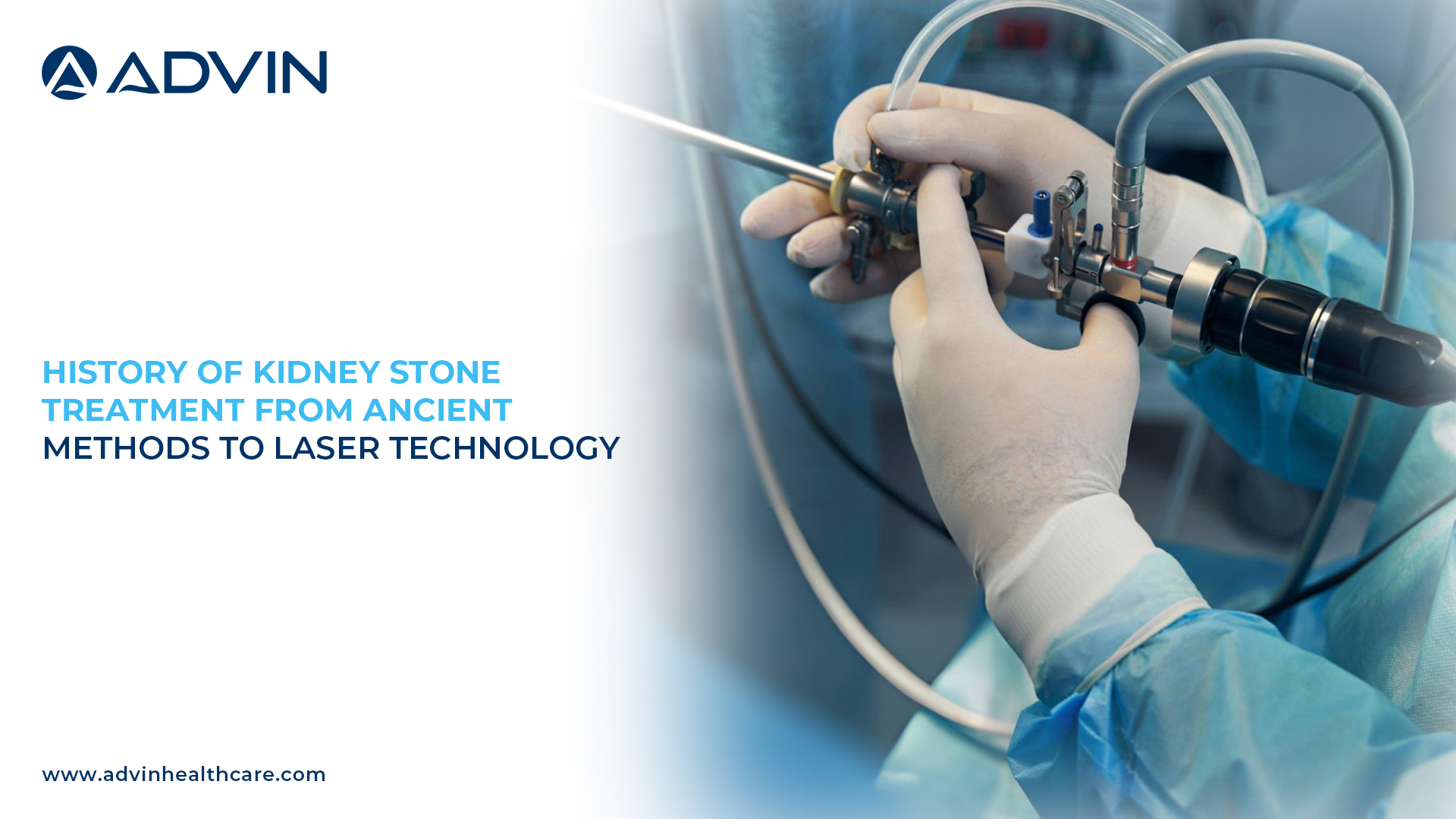
Introduction
Kidney stone disease is one of the oldest known medical conditions, affecting humans for thousands of years. The treatment of kidney stones has evolved dramatically—from painful, high-risk surgeries in ancient times to today’s advanced, minimally invasive laser procedures. This journey reflects the progress of medical science, technology, and patient care in urology.
Ancient Methods of Kidney Stone Treatment
In ancient civilizations such as Egypt, India, and Greece, kidney stones were treated using primitive and often dangerous techniques. The most common method was lithotomy, a surgical procedure to remove bladder stones through an incision.
Ancient texts like the Sushruta Samhita described stone diseases and their management. However, due to the lack of anesthesia and sterilization, these procedures were extremely painful and carried high risks of infection and mortality.
Medieval and Early Surgical Approaches
During the medieval period, specialized surgeons known as lithotomists performed stone removal procedures. While techniques improved slightly, the risks remained high.
Instruments became somewhat more refined, but the absence of proper medical knowledge and hygiene limited success rates. Kidney stone treatment was still considered one of the most dangerous surgical procedures.
19th Century: Beginning of Safer Treatments
The 19th century brought significant improvements with the introduction of anesthesia and antiseptic techniques. These advancements made surgeries safer and more controlled.
Doctors began to better understand the urinary system, leading to more effective surgical approaches. However, most procedures still required open surgery, which involved long recovery times and higher complication risks.
20th Century: Breakthrough Innovations
The 20th century marked a turning point in kidney stone treatment with the development of minimally invasive techniques. Key advancements included:
- Endoscopic procedures for internal visualization
- Percutaneous Nephrolithotomy (PCNL) for removing large kidney stones
- Ureteroscopy (URS) for accessing stones in the ureter
These techniques significantly reduced the need for open surgery and improved patient outcomes.
Introduction of ESWL (Shock Wave Therapy)
One of the most revolutionary advancements was Extracorporeal Shock Wave Lithotripsy (ESWL). This non-invasive method uses shock waves to break kidney stones into smaller fragments that can pass naturally through the urinary tract.
ESWL eliminated the need for surgery in many cases and became widely adopted due to its effectiveness and patient comfort.
Modern Era: Laser Technology in Stone Treatment
Today, laser technology has transformed kidney stone management. The use of Holmium laser lithotripsy allows precise fragmentation of stones during procedures like URS and RIRS (Retrograde Intrarenal Surgery).
Key benefits of laser treatment include:
- High precision and effectiveness
- Minimal tissue damage
- Faster recovery
- Ability to treat stones of various sizes and compositions
Laser technology has become a cornerstone of modern urology.
Role of Medical Device Companies
The advancement of kidney stone treatment is closely linked to innovation in medical devices. Companies like Advin Health Care provide essential equipment such as ureteroscopes, PCNL sets, lithotripters, and laser systems.
Their contribution ensures that healthcare providers can offer safe, efficient, and advanced treatment options to patients worldwide.
Future of Kidney Stone Treatment
The future of kidney stone management is focused on:
- Advanced laser systems with higher efficiency
- Robotic-assisted stone removal procedures
- AI-based diagnosis and treatment planning
- Improved non-invasive techniques
These innovations aim to make treatment even more precise, comfortable, and accessible.
Conclusion
The history of kidney stone treatment is a remarkable journey from painful and risky procedures to advanced, minimally invasive solutions. From ancient lithotomy to modern laser technology, each stage has contributed to safer and more effective patient care.