
 English
 Afrikaans
 Albanian
 Amharic
 Arabic
 Armenian
 Azerbaijani
 Basque
 Belarusian
 Bengali
 Bosnian
 Bulgarian
 Catalan
 Cebuano
 Chichewa
 Chinese (Simplified)
 Chinese (Traditional)
 Corsican
 Croatian
 Czech
Czech Danish
 Dutch
Dutch Esperanto
 Estonian
 Filipino
 Finnish
 French
 Frisian
 Galician
 Georgian
 German
 Greek
Greek Gujarati
 Haitian Creole
 Hausa
Hausa Hawaiian
 Hebrew
 Hindi
Hindi Hmong
Hmong Hungarian
 Icelandic
 Igbo
Igbo Indonesian
 Irish
Irish Italian
 Japanese
 Javanese
 Kannada
 Kazakh
 Khmer
Khmer Korean
 Kurdish (Kurmanji)
 Kyrgyz
 Lao
Lao Latin
Latin Latvian
 Lithuanian
 Luxembourgish
 Macedonian
 Malagasy
 Malay
Malay Malayalam
 Maltese
 Maori
Maori Marathi
 Mongolian
 Myanmar (Burmese)
 Nepali
 Norwegian
 Pashto
 Persian
 Polish
 Portuguese
 Punjabi
 Romanian
 Russian
 Samoan
 Scottish Gaelic
 Serbian
 Sesotho
 Shona
Shona Sindhi
 Sinhala
 Slovak
 Slovenian
 Somali
 Spanish
 Sudanese
 Swahili
 Swedish
 Tajik
Tajik Tamil
Tamil Telugu
 Thai
Thai Turkish
 Ukrainian
 Urdu
Urdu Uzbek
Uzbek Vietnamese
 Welsh
Welsh Xhosa
Xhosa Yiddish
 Yoruba
 Zulu
Zulu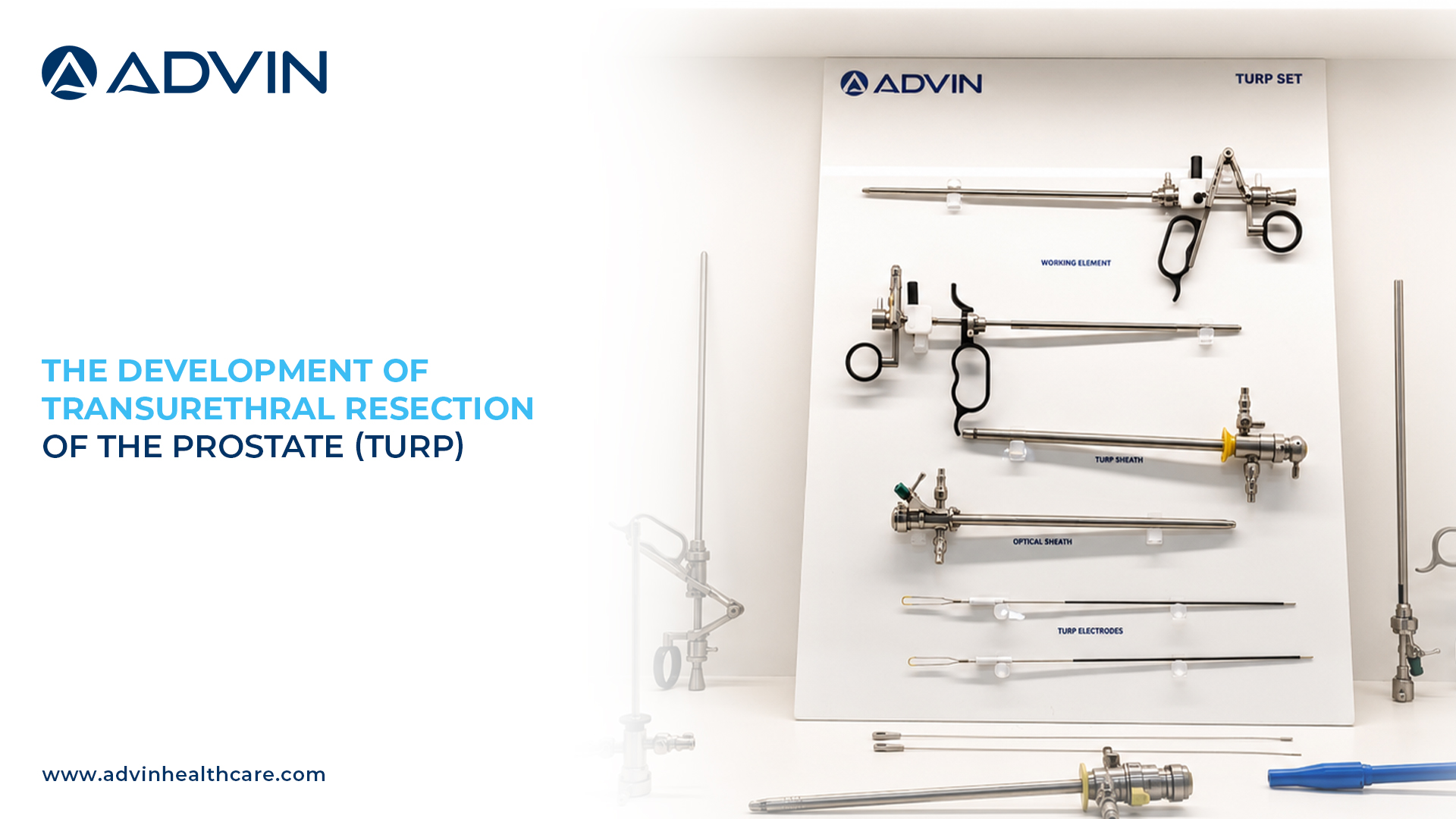
Introduction
Transurethral Resection of the Prostate (TURP) is one of the most important and widely performed procedures in urology. It is primarily used to treat benign prostatic hyperplasia (BPH), a condition where the prostate gland enlarges and causes urinary problems. Over the years, TURP has evolved from a basic surgical concept into a highly refined, minimally invasive procedure that remains the gold standard for prostate treatment.
Early Treatment of Prostate Disorders
Before the development of TURP, prostate enlargement was treated through open surgery. These procedures were highly invasive, required large incisions, and carried significant risks such as infection, bleeding, and long recovery times.
Due to these challenges, there was a strong need for a safer, less invasive method to treat prostate conditions effectively.
Introduction of TURP (Early 20th Century)
The early 20th century marked a breakthrough with the introduction of TURP. This technique allowed surgeons to remove excess prostate tissue through the urethra, eliminating the need for external incisions.
The development of the resectoscope, an instrument combining visualization and tissue resection, made this procedure possible. TURP quickly gained popularity due to its effectiveness and reduced patient trauma compared to open surgery.
Monopolar TURP Era
Initially, TURP was performed using monopolar electrosurgery. In this method:
- Electrical current passes through the resection loop
- Non-conductive fluids like glycine are used for irrigation
Monopolar TURP became the standard procedure for decades. However, it had some limitations, including the risk of TUR syndrome (fluid absorption complications) and restrictions on operating time.
Evolution to Bipolar TURP
To overcome the limitations of monopolar systems, bipolar TURP technology was introduced. This advancement brought several improvements:
- Use of normal saline as irrigation fluid
- Reduced risk of TUR syndrome
- Better safety and control during surgery
- Ability to perform longer procedures
Bipolar TURP significantly enhanced patient safety and is now widely preferred in modern urology practice.
Technological Advancements in TURP
Modern TURP procedures benefit from continuous innovation in medical technology, including:
- High-definition camera systems for better visualization
- Improved resectoscope designs for precision
- Advanced energy sources for efficient tissue removal
- Enhanced irrigation and fluid management systems
These advancements have made TURP more effective, faster, and safer than ever before.
Role of Medical Device Companies
The development and success of TURP are closely linked to advancements in medical device manufacturing. Companies like Advin Health Care contribute by providing high-quality TURP sets, resectoscopes, electrodes, and electrosurgical units.
Their focus on innovation and quality ensures that surgeons can perform procedures with maximum precision and safety.
TURP vs Modern Alternatives
While TURP remains the gold standard, newer technologies have emerged, such as:
- Laser prostate surgery (HoLEP, GreenLight laser)
- Minimally invasive therapies
However, TURP continues to be widely used due to its proven effectiveness, affordability, and long-term results.
Future of TURP
The future of TURP lies in further refinement and integration with advanced technologies, including:
- Robotic-assisted procedures
- AI-guided surgical systems
- Enhanced energy platforms
These innovations aim to improve outcomes while maintaining the reliability of traditional TURP techniques.
Conclusion
The development of Transurethral Resection of the Prostate (TURP) represents a major milestone in urology. From invasive open surgeries to advanced endoscopic techniques, TURP has revolutionized prostate treatment.