 English
 Afrikaans
 Albanian
 Amharic
 Arabic
 Armenian
 Azerbaijani
 Basque
 Belarusian
 Bengali
 Bosnian
 Bulgarian
 Catalan
 Cebuano
 Chichewa
 Chinese (Simplified)
 Chinese (Traditional)
 Corsican
 Croatian
 Czech
Czech Danish
 Dutch
Dutch Esperanto
 Estonian
 Filipino
 Finnish
 French
 Frisian
 Galician
 Georgian
 German
 Greek
Greek Gujarati
 Haitian Creole
 Hausa
Hausa Hawaiian
 Hebrew
 Hindi
Hindi Hmong
Hmong Hungarian
 Icelandic
 Igbo
Igbo Indonesian
 Irish
Irish Italian
 Japanese
 Javanese
 Kannada
 Kazakh
 Khmer
Khmer Korean
 Kurdish (Kurmanji)
 Kyrgyz
 Lao
Lao Latin
Latin Latvian
 Lithuanian
 Luxembourgish
 Macedonian
 Malagasy
 Malay
Malay Malayalam
 Maltese
 Maori
Maori Marathi
 Mongolian
 Myanmar (Burmese)
 Nepali
 Norwegian
 Pashto
 Persian
 Polish
 Portuguese
 Punjabi
 Romanian
 Russian
 Samoan
 Scottish Gaelic
 Serbian
 Sesotho
 Shona
Shona Sindhi
 Sinhala
 Slovak
 Slovenian
 Somali
 Spanish
 Sudanese
 Swahili
 Swedish
 Tajik
Tajik Tamil
Tamil Telugu
 Thai
Thai Turkish
 Ukrainian
 Urdu
Urdu Uzbek
Uzbek Vietnamese
 Welsh
Welsh Xhosa
Xhosa Yiddish
 Yoruba
 Zulu
Zulu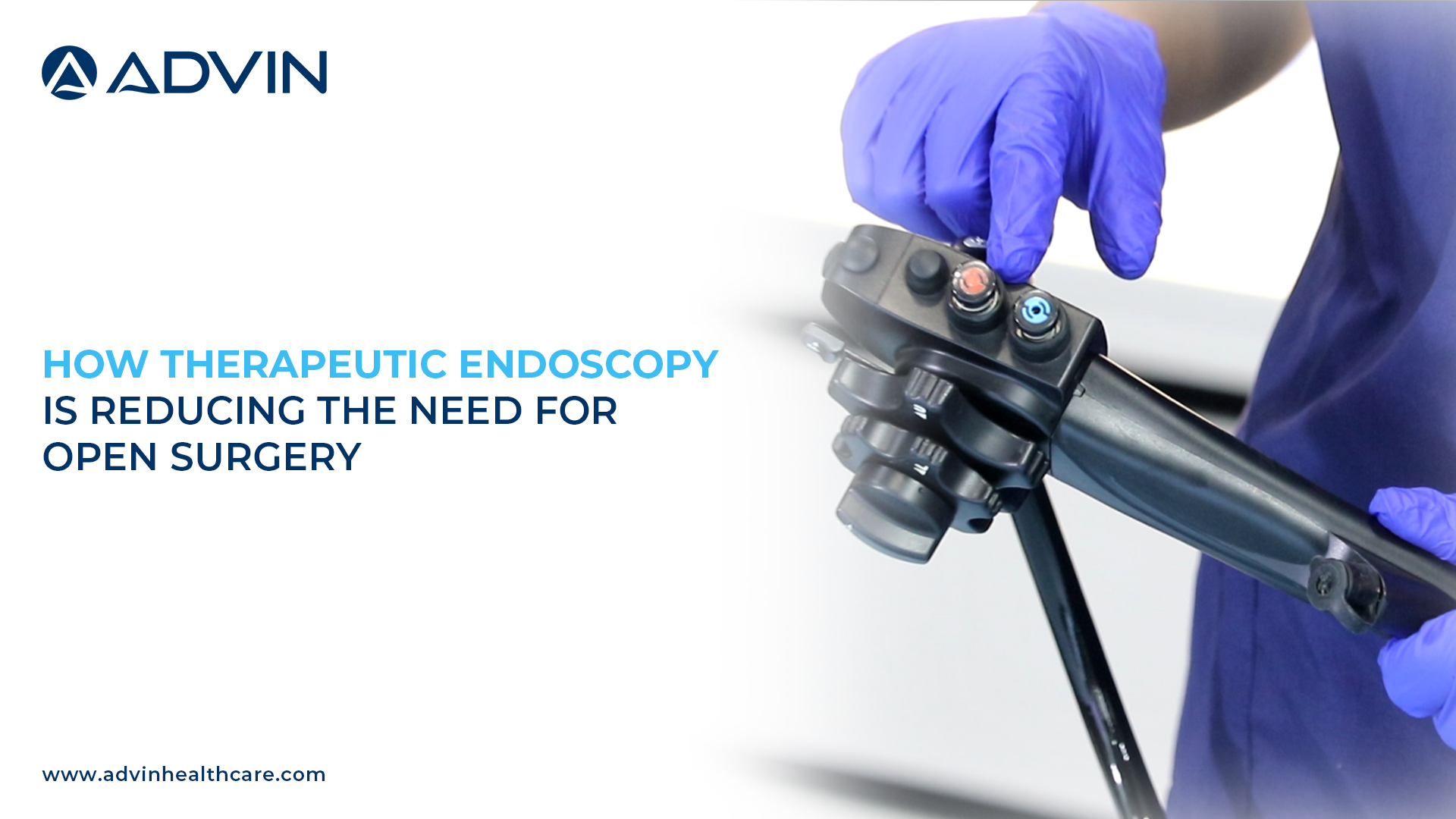
The Shift Toward Minimally Invasive GI Treatment
Therapeutic endoscopy is transforming gastrointestinal care by enabling diagnosis and treatment during the same minimally invasive procedure. Through natural body openings, interventional endoscopists can remove lesions, control bleeding, retrieve foreign bodies, dilate strictures and manage pancreaticobiliary disorders without large surgical incisions. This evolution supports shorter recovery, reduced tissue trauma and more patient-focused GI treatment.
From Diagnostic Endoscopy to Endoscopic Intervention
Conventional endoscopy was primarily used to visualize the digestive tract and obtain biopsy samples. Modern therapeutic endoscopy combines advanced imaging with specialized endoscopy accessories to perform targeted treatment through the endoscope’s working channel. Polypectomy and endoscopic mucosal resection can remove many colorectal polyps and selected superficial lesions without surgical bowel resection. Endoscopic haemostasis techniques can control gastrointestinal bleeding using clips, injection needles, thermal devices or variceal ligation. Esophageal dilation and endoscopic foreign-body retrieval can resolve selected obstructions without open surgical access. ERCP further enables minimally invasive bile-duct access, stone extraction, stricture dilation, drainage and biliary stent placement.
Key Applications of Advanced Therapeutic Endoscopy
Therapeutic endoscopy is increasingly used in the management of:
- Colorectal polyps and selected early gastrointestinal neoplasia
- Upper and lower gastrointestinal bleeding
- Esophageal varices requiring endoscopic band ligation
- Benign esophageal strictures and swallowing disorders
- Bile-duct stones, biliary strictures and obstructive jaundice
- Gastrointestinal foreign bodies and food-bolus impaction
- Conditions requiring percutaneous endoscopic gastrostomy access
The European Society of Gastrointestinal Endoscopy reports that most superficial colonic and rectal lesions can be removed using standard polypectomy or endoscopic mucosal resection. These procedures can therefore reduce avoidable surgery for suitable lesions when performed by trained endoscopists.
Advin Products Supporting Interventional Endoscopy
Advin Health Care manufactures single-use gastroenterology products and ERCP accessories for diagnostic and therapeutic endoscopy. Relevant products include:
- Polypectomy Snare for endoscopic polyp removal
- Endoscopy Biopsy Forceps for gastrointestinal tissue sampling
- Haemostasis Clip for mechanical control of selected bleeding lesions
- Sclerotherapy Needle for endoscopic injection procedures
- Multiband Ligator Set for esophageal variceal ligation
- Esophageal Balloon Dilator for controlled stricture dilation
- Foreign Body Forceps and Foreign Body Hood for retrieval procedures
- CBD Stone Retrieval Basket and Extraction Balloon for bile-duct stone management
- ERCP Guide Wire and Cannula for pancreaticobiliary access
- Biliary Plastic Stent and Stent Introducer Set for biliary drainage
These minimally invasive GI devices help endoscopists perform precise interventions while supporting procedural efficiency and infection-control protocols. Product selection must consider the clinical indication, endoscope working-channel compatibility, patient anatomy and approved instructions for use.
ERCP as an Alternative to Surgical Bile-Duct Exploration
ERCP has become a central therapeutic procedure for choledocholithiasis, biliary obstruction and selected pancreaticobiliary conditions. Stones may be removed using extraction balloons or retrieval baskets, while narrowed or obstructed ducts may be treated with dilation and stent placement. The ASGE describes ERCP as the primary minimally invasive treatment for bile-duct stones, although adverse events can occur and appropriate preventive strategies remain essential.
The Future of Precision Endoscopy
AI-assisted endoscopy, advanced endoscopic imaging, EMR, ESD and third-space endoscopy are expanding the boundaries of incision-free GI treatment. Techniques such as peroral endoscopic myotomy demonstrate how intramural endoscopic surgery can treat selected motility disorders through a natural-orifice approach.
Therapeutic endoscopy does not eliminate the need for surgery in advanced cancer, deep invasion, perforation, complex anatomy or failed endoscopic treatment. Instead, it provides an evidence-based, less invasive pathway that can prevent unnecessary open surgery while improving recovery and healthcare efficiency.