
 English
 Afrikaans
 Albanian
 Amharic
 Arabic
 Armenian
 Azerbaijani
 Basque
 Belarusian
 Bengali
 Bosnian
 Bulgarian
 Catalan
 Cebuano
 Chichewa
 Chinese (Simplified)
 Chinese (Traditional)
 Corsican
 Croatian
 Czech
Czech Danish
 Dutch
Dutch Esperanto
 Estonian
 Filipino
 Finnish
 French
 Frisian
 Galician
 Georgian
 German
 Greek
Greek Gujarati
 Haitian Creole
 Hausa
Hausa Hawaiian
 Hebrew
 Hindi
Hindi Hmong
Hmong Hungarian
 Icelandic
 Igbo
Igbo Indonesian
 Irish
Irish Italian
 Japanese
 Javanese
 Kannada
 Kazakh
 Khmer
Khmer Korean
 Kurdish (Kurmanji)
 Kyrgyz
 Lao
Lao Latin
Latin Latvian
 Lithuanian
 Luxembourgish
 Macedonian
 Malagasy
 Malay
Malay Malayalam
 Maltese
 Maori
Maori Marathi
 Mongolian
 Myanmar (Burmese)
 Nepali
 Norwegian
 Pashto
 Persian
 Polish
 Portuguese
 Punjabi
 Romanian
 Russian
 Samoan
 Scottish Gaelic
 Serbian
 Sesotho
 Shona
Shona Sindhi
 Sinhala
 Slovak
 Slovenian
 Somali
 Spanish
 Sudanese
 Swahili
 Swedish
 Tajik
Tajik Tamil
Tamil Telugu
 Thai
Thai Turkish
 Ukrainian
 Urdu
Urdu Uzbek
Uzbek Vietnamese
 Welsh
Welsh Xhosa
Xhosa Yiddish
 Yoruba
 Zulu
Zulu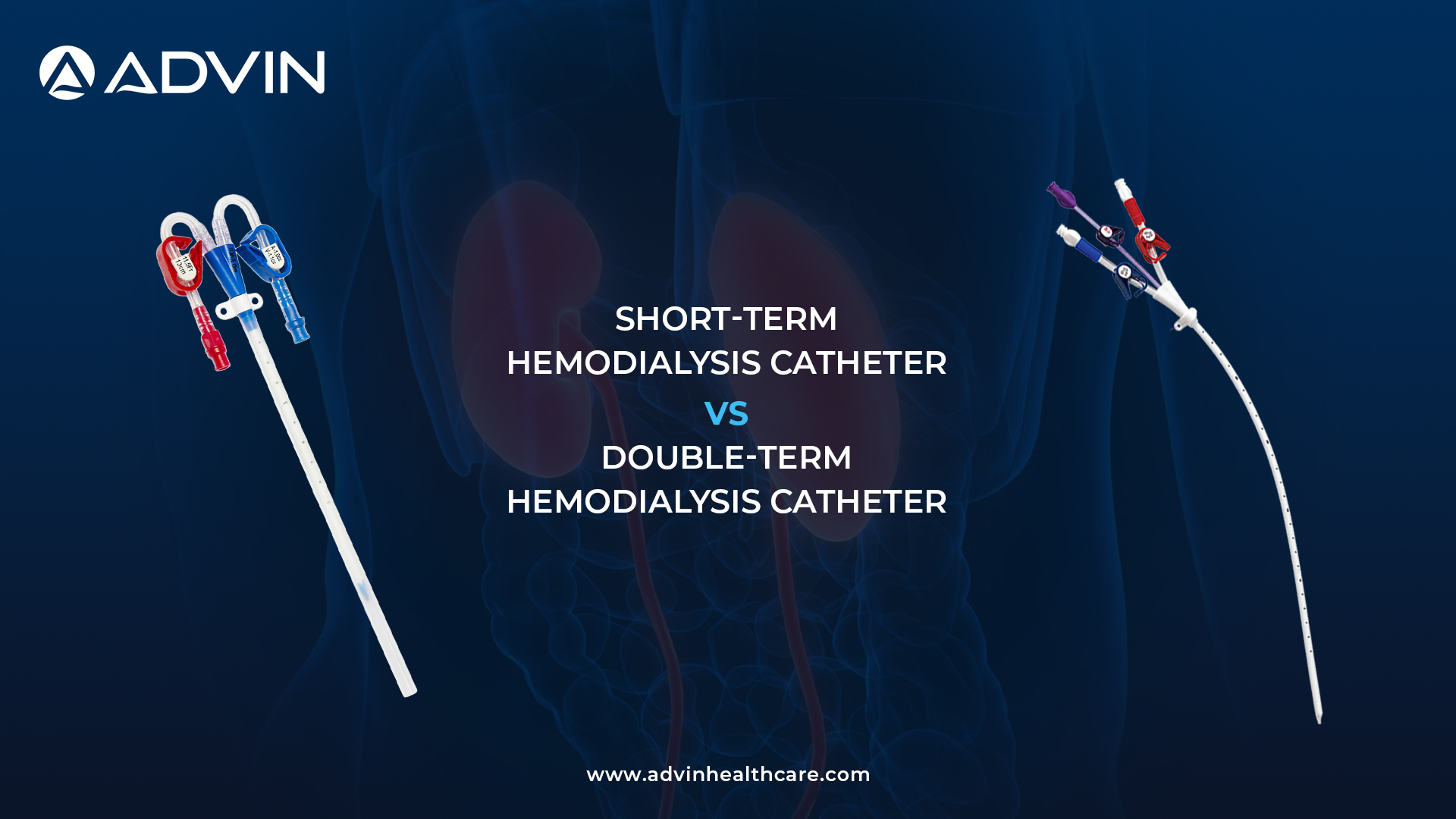
Vascular access is the lifeline of effective hemodialysis treatment. Among the available options, hemodialysis catheters are essential, particularly in urgent or transitional clinical situations. These catheters are broadly categorized into short-term and long-term types—each serving a distinct purpose in patient care.
Understanding their differences is crucial for selecting the right solution and ensuring optimal dialysis outcomes.
What is a Hemodialysis Catheter?
A hemodialysis catheter is a medical device inserted into a large vein to facilitate the removal and return of blood during dialysis. It is commonly used when immediate access is required or when permanent options like AV fistulas are not yet available.
Short-Term Hemodialysis Catheters
Short-term catheters are designed for immediate and temporary use, especially in emergency situations where dialysis must begin without delay.
Key Characteristics:
- Non-tunneled design (direct vein insertion)
- Typically placed in the internal jugular, femoral, or subclavian vein
- No cuff for tissue anchoring
- Quick and simple insertion procedure
Duration of Use:
- Suitable for a few days to a few weeks
Advantages:
- Rapid access for urgent dialysis
- Easy placement with minimal preparation
- Cost-effective for short-term needs
Limitations:
- Higher risk of infection
- Less secure (greater chance of displacement)
- Not recommended for prolonged use
Long-Term Hemodialysis Catheters
Long-term catheters are designed for extended use and are ideal when long-term dialysis is required or while waiting for permanent access to mature.
Key Characteristics:
- Tunneled under the skin
- Equipped with a cuff that promotes tissue ingrowth
- Provides better stability and secure placement
- Usually inserted in the internal jugular vein
Duration of Use:
- Suitable for months to years
Advantages:
- Lower infection risk compared to short-term catheters
- Improved stability and patient comfort
- Reliable for ongoing dialysis treatment
Limitations:
- Requires a minor surgical procedure
- Higher initial cost
- Needs proper care and maintenance
Short-Term vs Long-Term Catheters: Quick Comparison
| Feature | Short-Term Catheter | Long-Term Catheter |
|---|---|---|
| Design | Non-tunneled | Tunneled with cuff |
| Duration | Days to weeks | Months to years |
| Placement | Direct vein insertion | Subcutaneous tunneling |
| Infection Risk | Higher | Lower |
| Stability | Less stable | More secure |
| Procedure | Simple | Minor surgical procedure |
| Cost | Lower | Higher |
Which Catheter is Right for Your Patient?
The choice depends on several clinical factors, including:
- Urgency of dialysis initiation
- Expected duration of treatment
- Patient’s vascular condition
- Availability of long-term access options
Short-term catheters are best suited for emergency and temporary use, while long-term catheters provide a safer and more stable solution for extended dialysis therapy.
Conclusion
Both short-term and long-term hemodialysis catheters play a vital role in managing patients requiring dialysis. Choosing the appropriate type not only improves treatment efficiency but also reduces complications and enhances patient comfort.
A well-informed decision ensures better clinical outcomes and supports long-term patient care strategies.
Get Connected:
+91-75037 27249 | dialysis@advinhealthcare.com | www.advinhealthcare.com