 English
 Afrikaans
 Albanian
 Amharic
 Arabic
 Armenian
 Azerbaijani
 Basque
 Belarusian
 Bengali
 Bosnian
 Bulgarian
 Catalan
 Cebuano
 Chichewa
 Chinese (Simplified)
 Chinese (Traditional)
 Corsican
 Croatian
 Czech
Czech Danish
 Dutch
Dutch Esperanto
 Estonian
 Filipino
 Finnish
 French
 Frisian
 Galician
 Georgian
 German
 Greek
Greek Gujarati
 Haitian Creole
 Hausa
Hausa Hawaiian
 Hebrew
 Hindi
Hindi Hmong
Hmong Hungarian
 Icelandic
 Igbo
Igbo Indonesian
 Irish
Irish Italian
 Japanese
 Javanese
 Kannada
 Kazakh
 Khmer
Khmer Korean
 Kurdish (Kurmanji)
 Kyrgyz
 Lao
Lao Latin
Latin Latvian
 Lithuanian
 Luxembourgish
 Macedonian
 Malagasy
 Malay
Malay Malayalam
 Maltese
 Maori
Maori Marathi
 Mongolian
 Myanmar (Burmese)
 Nepali
 Norwegian
 Pashto
 Persian
 Polish
 Portuguese
 Punjabi
 Romanian
 Russian
 Samoan
 Scottish Gaelic
 Serbian
 Sesotho
 Shona
Shona Sindhi
 Sinhala
 Slovak
 Slovenian
 Somali
 Spanish
 Sudanese
 Swahili
 Swedish
 Tajik
Tajik Tamil
Tamil Telugu
 Thai
Thai Turkish
 Ukrainian
 Urdu
Urdu Uzbek
Uzbek Vietnamese
 Welsh
Welsh Xhosa
Xhosa Yiddish
 Yoruba
 Zulu
Zulu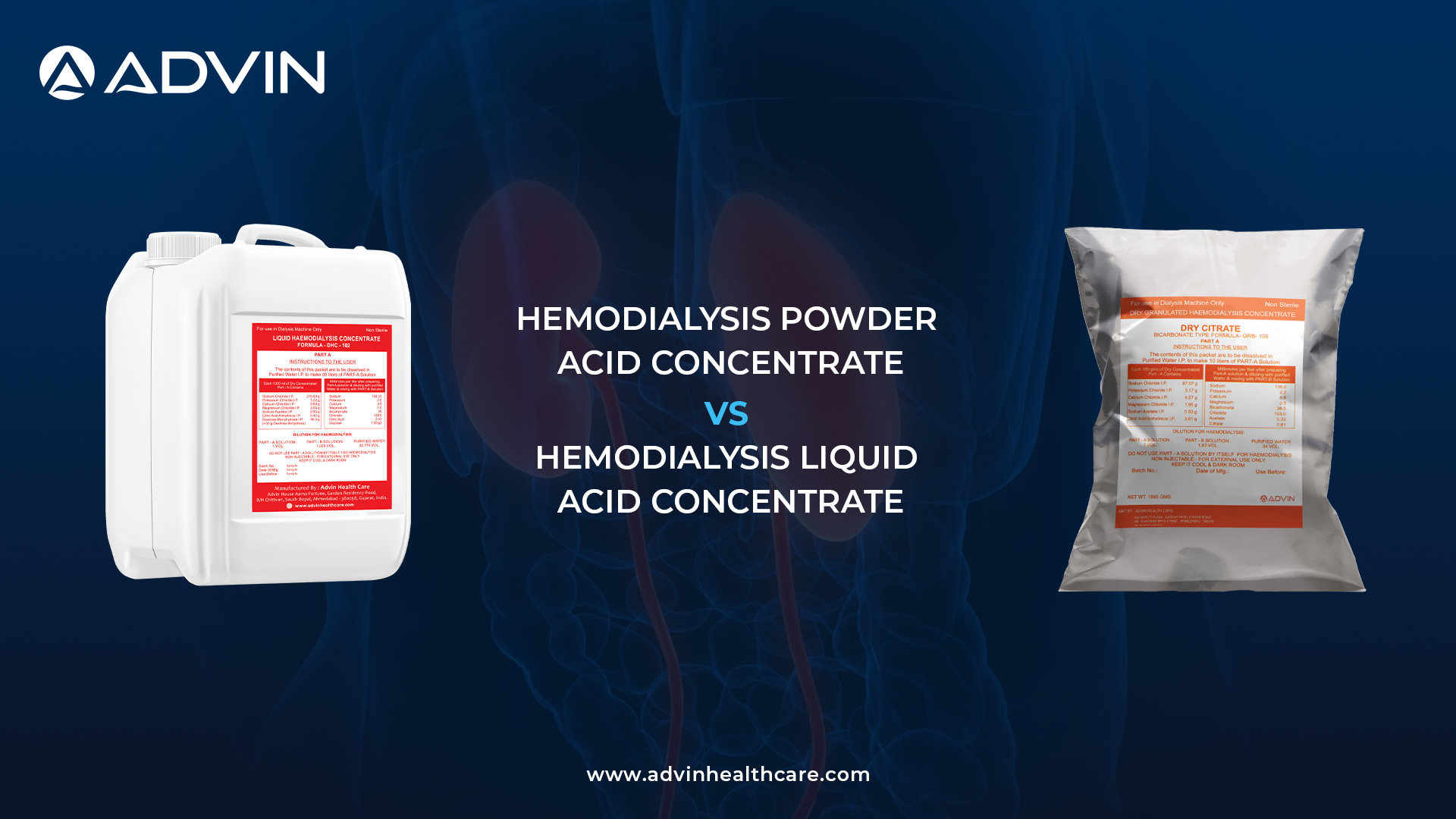
Hemodialysis requires a precisely prepared dialysate to maintain electrolyte balance and remove toxins from the blood. One of the essential components in this process is acid concentrate, which is available in two primary forms: powder and liquid.
Understanding the differences between these two forms helps dialysis centers choose the most efficient, safe, and cost-effective option.
What is Hemodialysis Acid Concentrate?
Acid concentrate is a critical component of dialysate, typically mixed with bicarbonate concentrate and purified RO water. It contains electrolytes such as sodium, potassium, calcium, magnesium, and an acidifying agent like acetic acid or citric acid, ensuring proper pH and electrolyte balance during dialysis.
Powder Acid Concentrate
Powder acid concentrate is supplied in dry form and requires mixing with purified water before use.
Advantages
- Cost-Effective Transportation: Lightweight and easy to ship, making it ideal for export markets
- Longer Shelf Life: More stable compared to liquid form
- Space Saving: Requires less storage space
- Lower Contamination Risk: Dry form reduces microbial growth
Limitations
- Requires proper mixing equipment or system
- Needs trained staff for accurate preparation
- Sensitive to moisture and humidity
Best Suited For
Large dialysis centers, bulk users, and facilities looking to reduce operational and logistics costs.
Liquid Acid Concentrate
Liquid acid concentrate is a pre-mixed solution that is ready to use directly in dialysis machines.
Advantages
- Ready-to-Use: No mixing required, reducing preparation time
- High Accuracy: Pre-formulated for consistent composition
- User-Friendly: Easy for staff to handle
- Widely Accepted: Compatible with most dialysis machines
Limitations
- Higher transportation and storage costs due to weight
- Requires larger storage space
- Shorter shelf life compared to powder
- Higher risk of microbial growth if not handled properly
Best Suited For
Hospitals and dialysis centers that prioritize ease of use, safety, and operational simplicity.
Key Differences at a Glance
| Feature | Powder Form | Liquid Form |
| Preparation | Requires mixing | Ready to use |
| Cost | Lower overall | Higher |
| Shelf Life | Longer | Shorter |
| Transport | Economical | Expensive |
| Storage | Compact | Bulky |
| Accuracy | Depends on mixing | Pre-defined |
| Ease of Use | Moderate | Very easy |
Which One Should You Choose?
The choice between powder and liquid acid concentrate depends on your operational priorities:
- Choose powder if your focus is on cost efficiency, scalability, and export logistics
- Choose liquid if your focus is on ease of use, accuracy, and minimal handling errors
Conclusion
Both powder and liquid acid concentrates play a vital role in hemodialysis, and each has its own advantages. While powder offers economic and logistical benefits, liquid provides convenience and consistency. Selecting the right option depends on the specific needs and infrastructure of the dialysis center.
Get Connected:
+91-75037 27249 | dialysis@advinhealthcare.com | www.advinhealthcare.com