
 English
 Afrikaans
 Albanian
 Amharic
 Arabic
 Armenian
 Azerbaijani
 Basque
 Belarusian
 Bengali
 Bosnian
 Bulgarian
 Catalan
 Cebuano
 Chichewa
 Chinese (Simplified)
 Chinese (Traditional)
 Corsican
 Croatian
 Czech
Czech Danish
 Dutch
Dutch Esperanto
 Estonian
 Filipino
 Finnish
 French
 Frisian
 Galician
 Georgian
 German
 Greek
Greek Gujarati
 Haitian Creole
 Hausa
Hausa Hawaiian
 Hebrew
 Hindi
Hindi Hmong
Hmong Hungarian
 Icelandic
 Igbo
Igbo Indonesian
 Irish
Irish Italian
 Japanese
 Javanese
 Kannada
 Kazakh
 Khmer
Khmer Korean
 Kurdish (Kurmanji)
 Kyrgyz
 Lao
Lao Latin
Latin Latvian
 Lithuanian
 Luxembourgish
 Macedonian
 Malagasy
 Malay
Malay Malayalam
 Maltese
 Maori
Maori Marathi
 Mongolian
 Myanmar (Burmese)
 Nepali
 Norwegian
 Pashto
 Persian
 Polish
 Portuguese
 Punjabi
 Romanian
 Russian
 Samoan
 Scottish Gaelic
 Serbian
 Sesotho
 Shona
Shona Sindhi
 Sinhala
 Slovak
 Slovenian
 Somali
 Spanish
 Sudanese
 Swahili
 Swedish
 Tajik
Tajik Tamil
Tamil Telugu
 Thai
Thai Turkish
 Ukrainian
 Urdu
Urdu Uzbek
Uzbek Vietnamese
 Welsh
Welsh Xhosa
Xhosa Yiddish
 Yoruba
 Zulu
Zulu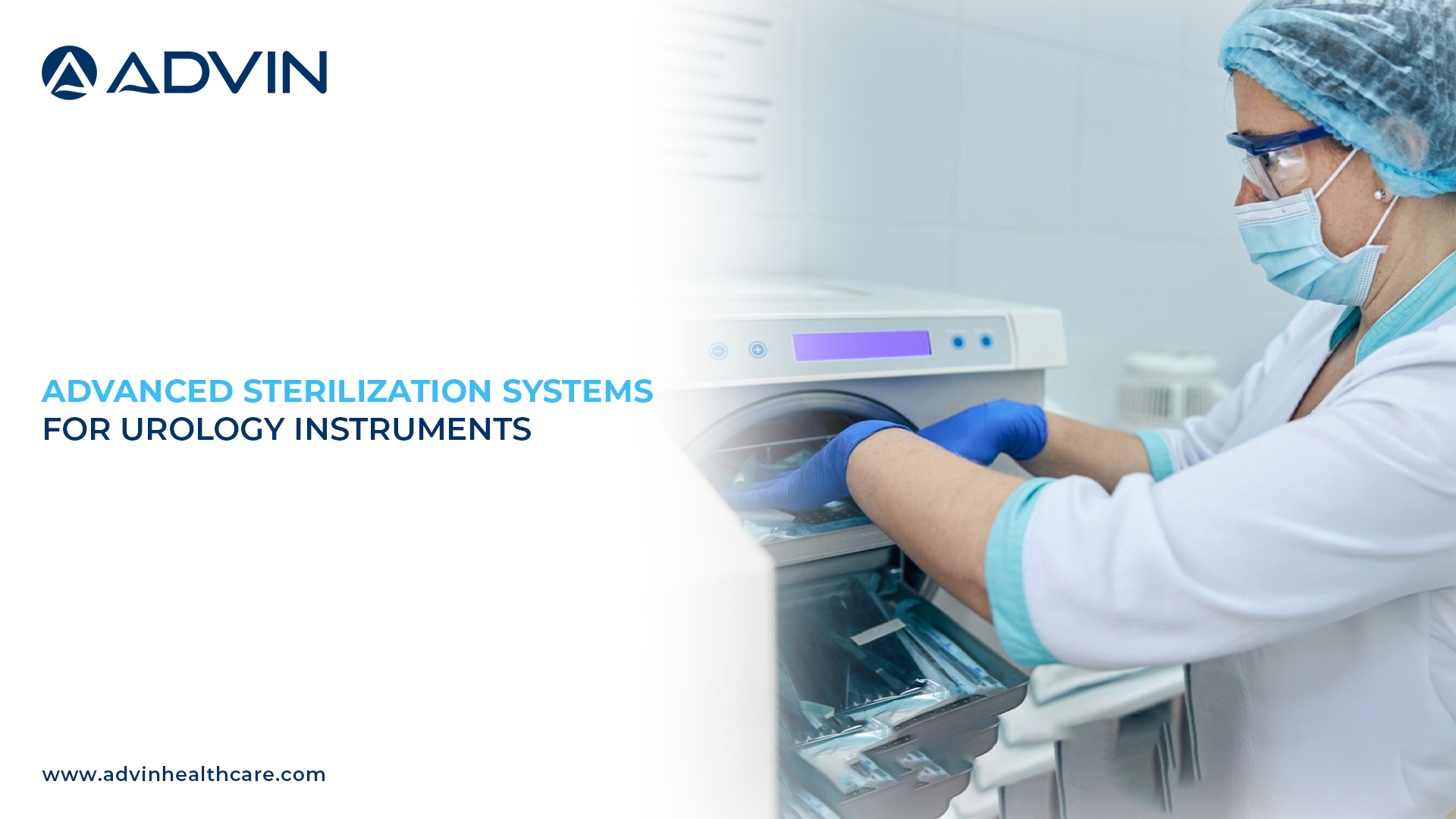
Industry Shift Overview
As minimally invasive urology procedures continue to grow, the importance of effective sterilization has become greater than ever. Modern urology instruments, including endoscopes, cystoscopes, ureteroscopes, and PCNL devices, require advanced sterilization processes to ensure patient safety, prevent infections, and maintain instrument performance.
Healthcare facilities worldwide are investing in advanced sterilization technologies to meet stricter infection control standards while supporting the increasing use of sophisticated surgical instruments.
Importance of Sterilization in Urology
Urology procedures involve direct contact with the urinary tract, making infection prevention a critical priority.
Key Objectives of Sterilization
- Eliminate microorganisms and pathogens
- Prevent cross-contamination
- Improve patient safety
- Extend instrument lifespan
- Ensure regulatory compliance
Proper sterilization plays a vital role in maintaining the reliability and performance of reusable urology instruments.
Evolution of Sterilization Technologies
Traditional sterilization methods are being replaced or complemented by advanced systems designed for modern surgical instruments.
Modern Sterilization Methods
- Steam Sterilization (Autoclave)
- Ethylene Oxide (ETO) Sterilization
- Hydrogen Peroxide Plasma Sterilization
- Low-Temperature Sterilization Systems
- Automated Endoscope Reprocessors (AER)
These technologies provide effective sterilization while protecting delicate endoscopic devices from damage.
Automated Endoscope Reprocessing Systems
Flexible endoscopes and ureteroscopes require specialized cleaning and disinfection procedures.
Benefits of Automated Reprocessors
- Standardized cleaning protocols
- Reduced human error
- Consistent disinfection results
- Improved workflow efficiency
- Enhanced infection control
Automated systems are increasingly used in hospitals to support high procedure volumes and regulatory compliance.
Low-Temperature Sterilization Technologies
Many modern urology devices contain sensitive optical and electronic components that cannot tolerate high temperatures.
Popular Low-Temperature Methods
Hydrogen Peroxide Plasma Sterilization
- Fast cycle times
- No toxic residue
- Suitable for heat-sensitive devices
Ethylene Oxide (ETO) Sterilization
- Effective for complex instruments
- Excellent material compatibility
- Widely used for delicate medical devices
These methods help preserve the integrity of advanced endoscopic equipment.
Growth of Disposable Urology Devices
One of the biggest trends in infection prevention is the growing adoption of disposable urology products.
Key Drivers
- Elimination of cross-contamination risk
- No reprocessing requirements
- Consistent device performance
- Reduced sterilization costs
High-Demand Disposable Products
- Guide Wires
- Laser Fibers
- Stone Retrieval Baskets
- Ureteral Access Sheaths
- Disposable Flexible Ureteroscopes
- Balloon Dilators
Single-use devices are becoming an important part of modern infection control strategies.
Smart Sterilization and Digital Monitoring
Advanced sterilization systems now incorporate digital technologies to improve traceability and compliance.
Emerging Innovations
- RFID instrument tracking
- Automated cycle documentation
- Digital sterilization records
- Smart compliance monitoring
- Real-time equipment status tracking
These technologies help healthcare facilities improve quality assurance and regulatory reporting.
Impact on Instrument Performance
Proper sterilization not only improves patient safety but also protects instrument quality.
Benefits
- Extended instrument lifespan
- Reduced maintenance costs
- Consistent surgical performance
- Improved reliability during procedures
This is particularly important for:
- Flexible Ureteroscopes
- Cystoscopes
- Resectoscopes
- PCNL Instruments
- Endoscopic Accessories
Future of Sterilization in Urology
The future of sterilization will focus on:
- Faster processing cycles
- Smart automated systems
- Enhanced infection prevention
- Increased adoption of disposable technologies
- Sustainable sterilization solutions
Healthcare providers will continue investing in advanced sterilization infrastructure to support the growing demand for minimally invasive urology procedures.
Advin Health Care and Urology Instrument Safety
Advin Health Care supports modern urology practice by manufacturing precision-engineered instruments and consumables designed to meet international quality and sterilization standards.
Key Product Categories
- Cystoscopy Instruments
- Flexible Ureteroscopy Products
- PCNL Instruments
- Guide Wires
- Stone Retrieval Devices
- Laser-Compatible Accessories
- Disposable Endourology Products
These products are developed to support safe, efficient, and reliable urology procedures across global healthcare markets.
Conclusion
Advanced sterilization systems are playing a crucial role in modern urology by enhancing infection control, improving patient safety, and protecting valuable surgical instruments. Technologies such as automated endoscope reprocessors, low-temperature sterilization systems, and digital monitoring solutions are helping healthcare providers meet the demands of increasingly sophisticated minimally invasive procedures.
As urology continues to evolve, effective sterilization and infection prevention strategies will remain essential components of high-quality patient care and successful surgical outcomes.