
 English
 Afrikaans
 Albanian
 Amharic
 Arabic
 Armenian
 Azerbaijani
 Basque
 Belarusian
 Bengali
 Bosnian
 Bulgarian
 Catalan
 Cebuano
 Chichewa
 Chinese (Simplified)
 Chinese (Traditional)
 Corsican
 Croatian
 Czech
Czech Danish
 Dutch
Dutch Esperanto
 Estonian
 Filipino
 Finnish
 French
 Frisian
 Galician
 Georgian
 German
 Greek
Greek Gujarati
 Haitian Creole
 Hausa
Hausa Hawaiian
 Hebrew
 Hindi
Hindi Hmong
Hmong Hungarian
 Icelandic
 Igbo
Igbo Indonesian
 Irish
Irish Italian
 Japanese
 Javanese
 Kannada
 Kazakh
 Khmer
Khmer Korean
 Kurdish (Kurmanji)
 Kyrgyz
 Lao
Lao Latin
Latin Latvian
 Lithuanian
 Luxembourgish
 Macedonian
 Malagasy
 Malay
Malay Malayalam
 Maltese
 Maori
Maori Marathi
 Mongolian
 Myanmar (Burmese)
 Nepali
 Norwegian
 Pashto
 Persian
 Polish
 Portuguese
 Punjabi
 Romanian
 Russian
 Samoan
 Scottish Gaelic
 Serbian
 Sesotho
 Shona
Shona Sindhi
 Sinhala
 Slovak
 Slovenian
 Somali
 Spanish
 Sudanese
 Swahili
 Swedish
 Tajik
Tajik Tamil
Tamil Telugu
 Thai
Thai Turkish
 Ukrainian
 Urdu
Urdu Uzbek
Uzbek Vietnamese
 Welsh
Welsh Xhosa
Xhosa Yiddish
 Yoruba
 Zulu
Zulu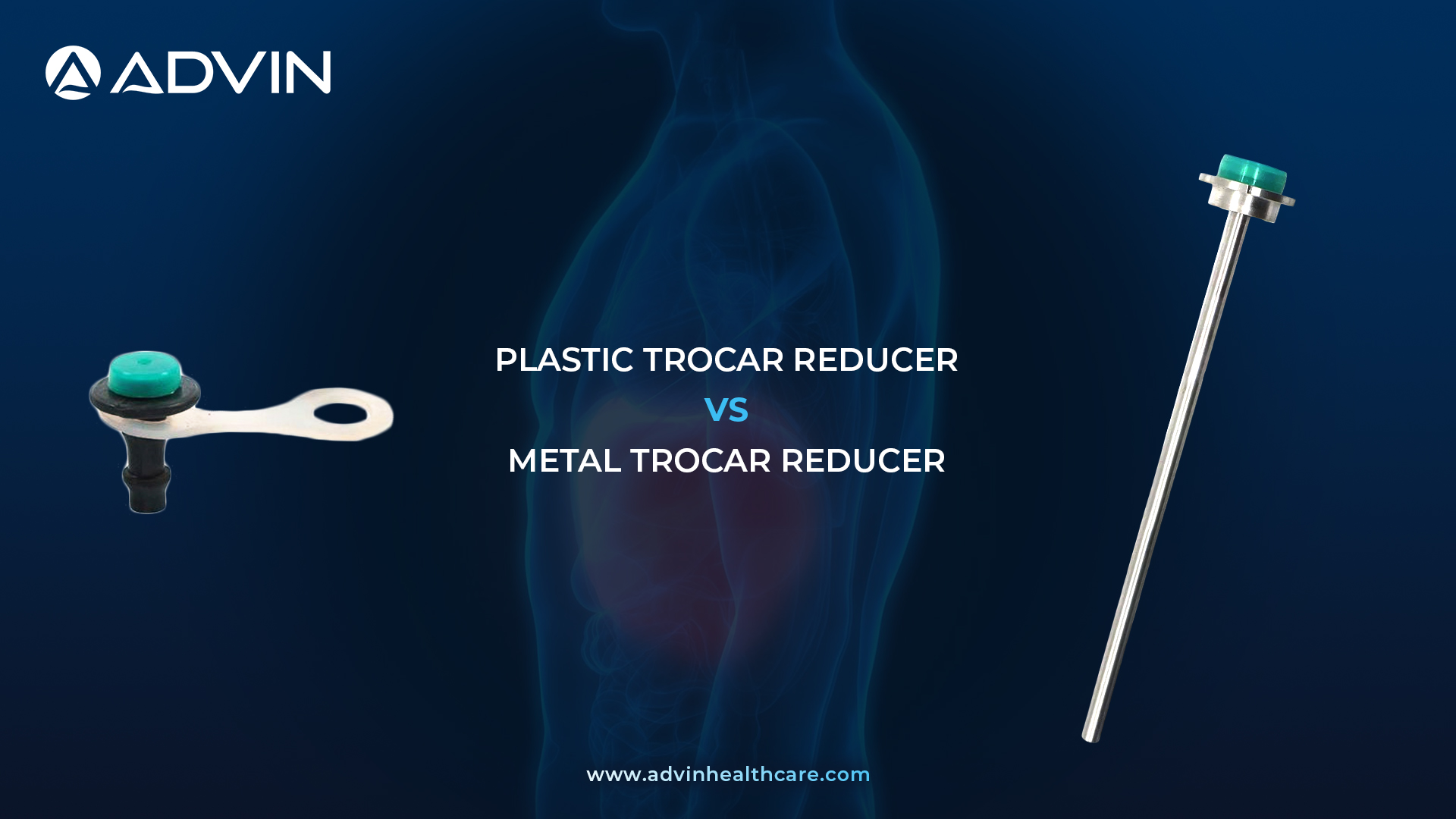
Introduction: Material Choice Affects Workflow and Performance
Trocar reducers are essential laparoscopic accessories used to adapt larger ports (e.g., 10mm) for smaller instruments (e.g., 5mm) while maintaining pneumoperitoneum and instrument stability. The choice between a Plastic Trocar Reducer and a Metal Trocar Reducer depends on usage pattern, durability, and operational efficiency.
- Plastic → Convenient, lightweight, and ready-to-use
- Metal → Durable, stable, and long-term solution
Product Overview in Clinical Use
Plastic Trocar Reducer
Plastic trocar reducers are made from medical-grade polymers, designed for ease of handling and quick setup.
Key characteristics:
- Lightweight design
- Often disposable or limited reuse
- Compatible with standard trocars
Clinical advantages:
- No need for sterilization (in disposable types)
- Faster workflow in high-volume settings
- Cost-effective per procedure
They are commonly used in routine laparoscopic procedures and high patient turnover environments.
Metal Trocar Reducer
Metal trocar reducers are made from stainless steel, designed for strength and repeated use.
Key characteristics:
- Rigid and robust construction
- Fully reusable
- High resistance to wear and deformation
Clinical advantages:
- Excellent stability and secure fit
- Long lifespan with repeated sterilization
- Reliable performance in demanding procedures
They are widely used in hospitals focusing on reusable systems and long-term cost efficiency.
Workflow-Based Usage: Convenience vs Longevity
Both reducers serve the same function but differ in usage approach:
- Plastic → Ready-to-use, no maintenance
- Metal → Requires sterilization, long-term use
This impacts:
- Turnaround time
- Cost over time
- Instrument lifecycle
Core Differences That Drive Clinical Choice
The key difference lies in material durability and usage cycle:
- Plastic reducers offer speed and convenience
- Metal reducers provide strength and long-term reliability
Quick Comparison Overview
| Aspect | Plastic Trocar Reducer | Metal Trocar Reducer |
|---|---|---|
| Material | Medical-grade plastic | Stainless steel |
| Weight | Lightweight | Heavier |
| Durability | Moderate | Very high |
| Reusability | Disposable / limited | Fully reusable |
| Sterility | Pre-sterilized options | Requires sterilization |
| Handling | Easy | Firm and stable |
| Gas Seal | Good | Excellent |
| Cost (Initial) | Lower | Higher |
| Long-Term Cost | Higher | Lower |
Clinical Preference & Real-World Application
Plastic Trocar Reducer is commonly used in:
- High-volume surgical centers
- Disposable instrument setups
- Routine laparoscopic procedures
Its design ensures quick setup and efficient workflow.
Metal Trocar Reducer is preferred in:
- Reusable instrument systems
- Long-term cost-saving strategies
- Complex or heavy-duty procedures
Its durability ensures consistent and stable performance.
Practical Selection Guide
- Choose Plastic Trocar Reducer for convenience and fast workflow
- Choose Metal Trocar Reducer for durability and long-term use
- Use plastic in high-turnover environments
- Use metal in controlled, reusable setups
Conclusion: Speed vs Strength
Both trocar reducers are essential in laparoscopic surgery:
- Plastic → Lightweight, convenient, and efficient
- Metal → Strong, durable, and cost-effective long-term
The ideal choice depends on:
- Hospital workflow
- Sterilization capability
- Budget strategy
Why Advin Health Care is the Right Choice
Advin Health Care offers high-quality trocar reducers designed for precision and reliability.
- Plastic reducers provide ease of use and efficient workflow
- Metal reducers deliver durability and consistent performance
With Advin, healthcare providers benefit from:
- Premium materials
- Precision engineering
- Reliable surgical outcomes
Get Connected:
+91-70717 27261 | urology@advinhealthcare.com | www.advinhealthcare.com