
 English
 Afrikaans
 Albanian
 Amharic
 Arabic
 Armenian
 Azerbaijani
 Basque
 Belarusian
 Bengali
 Bosnian
 Bulgarian
 Catalan
 Cebuano
 Chichewa
 Chinese (Simplified)
 Chinese (Traditional)
 Corsican
 Croatian
 Czech
Czech Danish
 Dutch
Dutch Esperanto
 Estonian
 Filipino
 Finnish
 French
 Frisian
 Galician
 Georgian
 German
 Greek
Greek Gujarati
 Haitian Creole
 Hausa
Hausa Hawaiian
 Hebrew
 Hindi
Hindi Hmong
Hmong Hungarian
 Icelandic
 Igbo
Igbo Indonesian
 Irish
Irish Italian
 Japanese
 Javanese
 Kannada
 Kazakh
 Khmer
Khmer Korean
 Kurdish (Kurmanji)
 Kyrgyz
 Lao
Lao Latin
Latin Latvian
 Lithuanian
 Luxembourgish
 Macedonian
 Malagasy
 Malay
Malay Malayalam
 Maltese
 Maori
Maori Marathi
 Mongolian
 Myanmar (Burmese)
 Nepali
 Norwegian
 Pashto
 Persian
 Polish
 Portuguese
 Punjabi
 Romanian
 Russian
 Samoan
 Scottish Gaelic
 Serbian
 Sesotho
 Shona
Shona Sindhi
 Sinhala
 Slovak
 Slovenian
 Somali
 Spanish
 Sudanese
 Swahili
 Swedish
 Tajik
Tajik Tamil
Tamil Telugu
 Thai
Thai Turkish
 Ukrainian
 Urdu
Urdu Uzbek
Uzbek Vietnamese
 Welsh
Welsh Xhosa
Xhosa Yiddish
 Yoruba
 Zulu
Zulu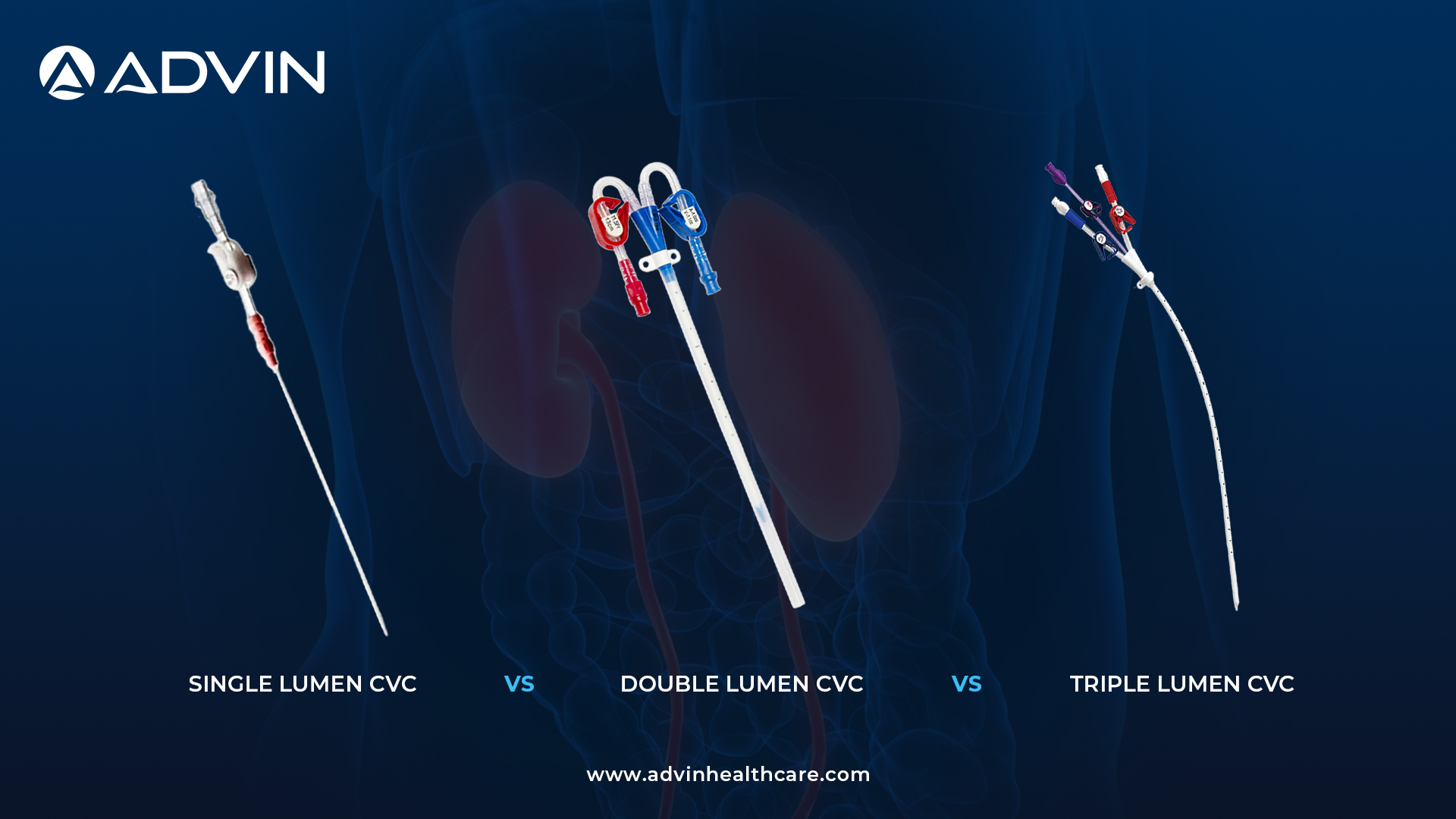
Central Venous Catheters (CVCs) are a cornerstone of modern medical care, enabling safe and efficient delivery of fluids, medications, and critical therapies. Available in single lumen, double lumen, and triple lumen configurations, each type is designed to meet different clinical needs.
Choosing the right CVC is essential for optimizing treatment outcomes, improving workflow efficiency, and minimizing complications.
What is a Central Venous Catheter (CVC)?
A Central Venous Catheter (CVC) is a flexible tube inserted into a large vein—commonly the internal jugular, subclavian, or femoral vein. It provides direct access to central circulation and is widely used in:
- Intensive care units (ICU)
- Emergency settings
- Long-term therapies
CVCs support multiple functions, including medication delivery, fluid management, blood sampling, and hemodynamic monitoring.
Understanding Lumen Configuration
The term lumen refers to the internal channel within a catheter. Each lumen acts as an independent pathway, allowing simultaneous administration of different fluids or medications—especially important when drugs are incompatible.
Single Lumen CVC
Single lumen CVCs have one channel, making them suitable for straightforward clinical applications.
Key Features:
- Single internal pathway
- Smaller diameter
- Simple design
Common Applications:
- Fluid administration
- Medication delivery
- Basic patient care
Advantages:
- Lower infection risk
- Easier insertion and maintenance
- Cost-effective
Limitations:
- Limited functionality
- Cannot handle multiple therapies at once
Double Lumen CVC
Double lumen CVCs include two independent channels, providing greater flexibility for patient management.
Key Features:
- Two separate lumens
- Moderate size
- Supports simultaneous therapies
Common Applications:
- Infusion of incompatible medications
- Combination of fluids and blood products
- Intermediate care settings
Advantages:
- Improved treatment efficiency
- Reduces need for multiple catheter insertions
- Versatile in various clinical scenarios
Limitations:
- Moderate infection risk
- Requires proper handling and monitoring
Triple Lumen CVC
Triple lumen CVCs are designed for complex and critical care situations, offering maximum functionality.
Key Features:
- Three independent lumens
- Multi-purpose design
- Larger catheter size
Common Applications:
- ICU and critical care patients
- Simultaneous administration of multiple medications
- Parenteral nutrition, fluids, and monitoring
Advantages:
- High flexibility in treatment
- Minimizes need for additional access points
- Ideal for multi-drug therapy
Limitations:
- Higher infection risk
- More complex maintenance
- Larger size may increase insertion difficulty
Key Differences at a Glance
| Feature | Single Lumen CVC | Double Lumen CVC | Triple Lumen CVC |
|---|---|---|---|
| Number of Lumens | 1 | 2 | 3 |
| Functionality | Basic | Moderate | Advanced |
| Simultaneous Use | No | Yes | Yes |
| Infection Risk | Lowest | Moderate | Highest |
| Complexity | Simple | Moderate | High |
| Typical Use | General care | Intermediate care | ICU / Critical care |
How to Choose the Right CVC?
Selecting the appropriate CVC depends on:
- Patient condition and severity
- Number of therapies required
- Duration of treatment
- Risk of infection
- Single lumen CVC → Best for simple, single therapy needs
- Double lumen CVC → Ideal for moderate, dual therapy requirements
- Triple lumen CVC → Preferred for ICU patients requiring multiple simultaneous treatments
Conclusion
Single, double, and triple lumen CVCs each play a vital role in patient care. While single lumen catheters offer simplicity and safety, multi-lumen options provide the flexibility required in complex clinical environments.
A well-informed choice ensures efficient treatment delivery, reduces complications, and enhances overall patient outcomes.
Get Connected:
+91-75037 27249 | dialysis@advinhealthcare.com | www.advinhealthcare.com